
How Educational Technology Is Transforming Administrative Work in Schools

Introduction
For many schools and preschools, administrative work has traditionally relied on manual processes. Teachers take attendance in printed registers, administrators manage student records across spreadsheets or paper files, and communication with parents often depends on email chains, phone calls, or physical notices. Enrolment forms, health declarations, fee records, and daily updates can quickly become time-consuming to manage when handled across multiple systems or manual workflows.
Today, educational technology is transforming not only classroom learning, but also the way schools organise and manage their daily operations. Modern digital school management platforms help schools centralise student records, automate routine administrative tasks, streamline parent communication, and improve visibility across attendance, reporting, and operational processes.
In Singapore, this shift reflects a broader move towards digital transformation in education, where schools and preschool operators are looking for more efficient ways to manage administrative work while maintaining strong communication with families. From attendance tracking and digital forms to parent updates and multi-centre reporting, the right platform can reduce administrative burden while giving school leaders, teachers, and administrators a clearer view of day-to-day operations.
By integrating these functions into one connected system, schools can simplify administration, improve coordination across teams, and free educators to focus more on teaching and student development.
Key Takeaways
- How is school administration evolving today?
Schools and preschools are moving from manual paperwork and fragmented systems to digital platforms with educational technology that centralise attendance, student records, parent communication, and reporting.
- Why are digital school management platforms important?
They bring together daily administrative tasks such as enrolment, attendance, communication, and operational reporting into one connected system, reducing duplication and manual work.
- How do digital platforms improve parent communication?
Schools can share announcements, reminders, attendance updates, and classroom information more efficiently through a parent-facing app or portal.
- How do school leaders benefit from digital administration tools?
Leadership teams gain clearer visibility into attendance, records, operational updates, and centre-level performance through structured dashboards and reports.
- What should schools look for in a digital management platform?
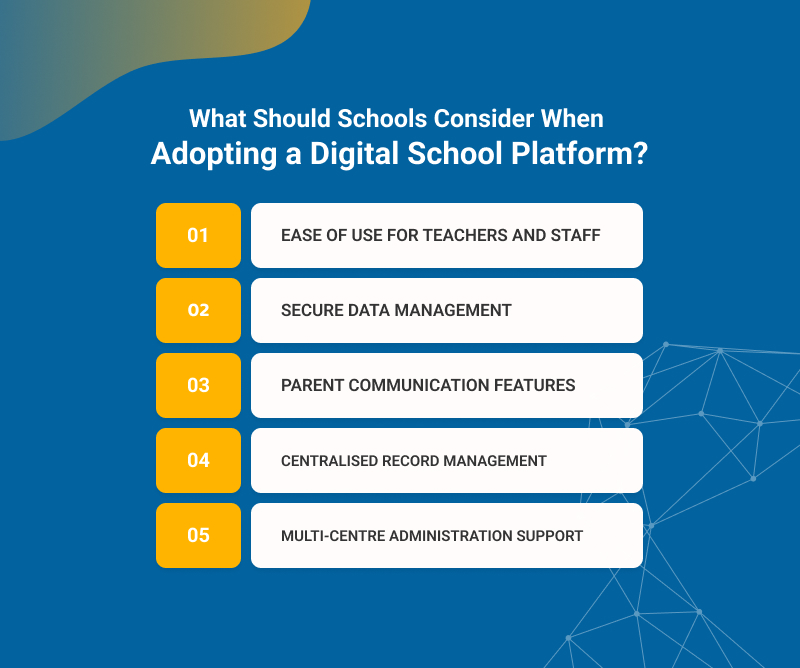
Ease of use, centralised record management, strong parent communication features, multi-centre support, and responsible data management practices.
Understanding Educational Technology in School Operations
2.1 Expanding the Meaning of Educational Technology in Schools
When people think of educational technology, they often picture online lessons, digital learning content, or classroom teaching tools. In practice, educational technology also includes the digital systems that support school administration and daily operations behind the scenes.
For schools, preschools, and childcare centres, these operational systems play a critical role in managing attendance, student records, enrolment information, parent communication, administrative reporting, and day-to-day workflows. Instead of relying on separate spreadsheets, paper forms, and disconnected communication channels, schools can organise these responsibilities through one structured digital platform.
This is where school management systems become an important part of the broader EdTech landscape. A well-designed platform supports not only teaching and learning, but also the operational processes that keep a school running smoothly. By centralising information and reducing manual administration, schools can improve efficiency while maintaining more consistent records and communication across the organisation.
2.2 Connecting Teachers, Parents and Administrators through Digital Platforms
Schools operate as collaborative communities where teachers, administrators, and parents rely on timely information to support student development. Communication delays or incomplete records can disrupt this coordination and create additional administrative work.
Digital platforms provide a central parent communication platform where schools can share announcements, reminders, and classroom updates. Instead of relying on printed notices or delayed messages, parents receive information directly through secure digital channels.
Qoqolo platform illustrates how this integration functions in real school environments. Through the Qoqolo app, teachers can record attendance, share updates with families, and coordinate classroom information within the same system used for administrative tasks.
This connected structure ensures that information flows consistently between educators, administrators, and parents, strengthening collaboration across the entire school ecosystem.
2.3 Why Digital Transformation Matters for Singapore's Education Landscape
In Singapore, schools and preschool operators are under increasing pressure to deliver strong educational experiences while managing administrative work efficiently and consistently. Attendance tracking, enrolment administration, parent communication, reporting, and daily operations all require timely coordination between teachers, administrators, and leadership teams.
This is especially relevant for operators managing multiple centres, where maintaining consistent processes across locations can become difficult when records, communication, and reporting are handled separately. Digital school management platforms help address this challenge by centralising information, standardising workflows, and giving school leaders better visibility across day-to-day operations.
As part of Singapore’s broader Smart Nation strategy, schools are increasingly adopting cloud-based systems that improve accessibility, streamline administration, and support more responsive communication with families. For many education providers, digital transformation is no longer only about introducing technology into classrooms; it is also about building a more efficient and connected operational foundation for the school as a whole.
Streamlining Administrative Processes
3.1 Reducing Administrative Workload Through Automation
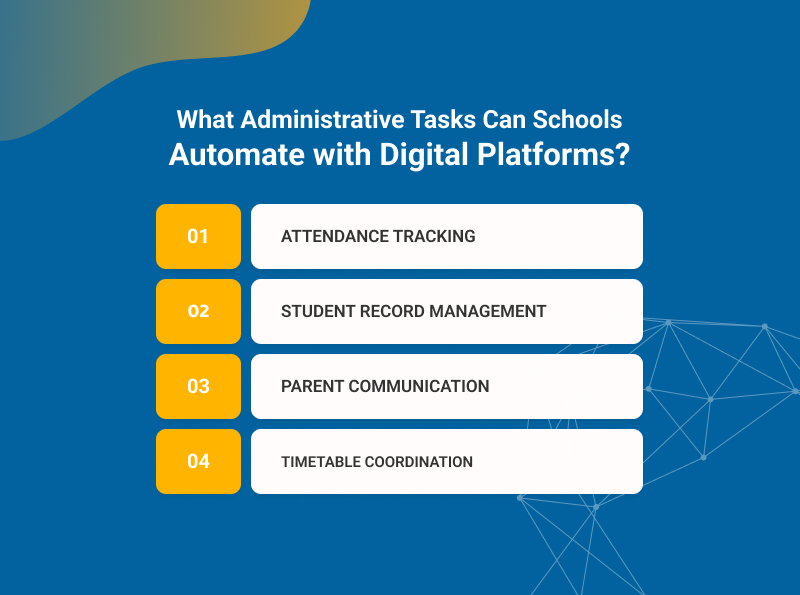
Administrative work in schools often involves repetitive tasks such as taking attendance, updating student records, preparing reports, sending reminders to parents, and maintaining communication logs. While each task may be simple on its own, together they can consume a significant amount of time for teachers and administrative staff.
Digital school management platforms reduce this burden by automating and streamlining routine workflows. Attendance records can be updated directly in the system, parent notifications can be sent through the same platform, and student or class information can be retrieved without switching between multiple spreadsheets or paper files. Digital forms and centralised records also reduce the need to manually transfer information between documents or departments.
For educators and administrators, the value of automation is not simply speed. It is the ability to manage daily operations more consistently, reduce duplication, and spend less time on paperwork. When routine tasks are handled more efficiently, teachers can focus more on classroom engagement while administrators gain a clearer and more reliable operational view of the school.
Automation reduces the need to transfer information between multiple documents or spreadsheets. As a result, schools can maintain accurate records while significantly reducing administrative workload.
Through these improvements, educational technology helps educators maintain organised documentation while focusing more fully on classroom teaching.
3.2 Transforming Daily Administrative Workflows
The impact of digital administration becomes clearer when schools compare traditional workflows with modern connected systems.
In a manual environment, a teacher may record attendance in class, pass information to the administrative team, and rely on separate channels to notify parents or update internal records. Administrative staff may then need to consolidate attendance logs, update reports, or verify information across multiple files. The same pattern often appears in other areas of school operations, from parent notices and event reminders to student record updates and administrative reporting.
With a digital school management platform, these workflows become more connected. Teachers can update attendance directly in the system, authorised administrators can access the information immediately, and parent notifications or operational records can be updated through the same platform where needed. Instead of repeating the same information across multiple tools, schools can manage daily administrative tasks within one coordinated environment.
This reduces delays, improves accuracy, and makes everyday school administration easier to manage at both classroom and administrative levels.
3.3 Centralising Student Records and Administrative Data
Schools generate large volumes of information each day, including student profiles, attendance logs, schedules, and communication records. Managing these records through manual systems can become increasingly complex as schools grow.
Centralised digital platforms allow administrators to organise all essential information within a structured environment. Instead of searching through physical files or multiple databases, authorised users can access records instantly.
Schools implementing a preschool management system in Singapore benefit from platforms that integrate enrolment data, attendance tracking, and administrative reporting into a single interface. This structure reduces administrative complexity while ensuring that school documentation remains consistent and accessible.
Digital systems do more than improve administrative efficiency. When implemented thoughtfully, educational technology strengthens collaboration between teachers, parents, and school leaders by ensuring that information flows clearly across the school community.
Integrated platforms allow schools to organise communication, attendance tracking, and operational updates in ways that benefit everyone involved in the learning environment. By connecting educators, administrators, and families through structured digital systems, schools foster a more transparent and responsive community.
Supporting the School Community
4.1 Managing Multi-Centre School Operations
Many education providers in Singapore operate more than one school or preschool location. As organisations grow, administrative complexity also increases. Each centre may be managing attendance, parent communication, enrolment information, and reporting on a daily basis, and without a central system, it becomes difficult for leadership teams to maintain visibility and consistency across the organisation.
A digital school management platform helps address this by bringing multiple centres onto one shared system. Leadership teams can review attendance information, operational updates, communication records, and centre-level reporting through a central dashboard, while individual centres continue managing their day-to-day operations within the same platform.
This kind of central oversight is particularly valuable for operators that want to standardise administrative processes across centres, maintain more consistent parent communication practices, and reduce the need for manual consolidation of records from different locations. With better visibility across the organisation, school leaders can identify issues earlier, compare trends across centres, and support each location more effectively.
4.2 Improving Parent Engagement Through Digital Platforms
Parent communication is an essential part of school administration. Families expect timely updates about school activities, important reminders, attendance matters, and their child’s day-to-day school experience. When communication depends on printed notices, email chains, or multiple messaging channels, it can be difficult for schools to keep parents consistently informed without creating extra administrative work.
Digital school platforms using educational technology help streamline this by giving schools a dedicated channel for parent communication. Teachers and administrators can share announcements, reminders, attendance-related updates, and school notices through one connected system, while parents can access information through a structured app or portal rather than relying on scattered communication channels.
For preschools, a portal improves efficiency and reduces the need for repeated follow-ups. For parents, it creates a clearer and more convenient experience.
When communication is timely, organised, and accessible in one place, schools can strengthen parent engagement while reducing the administrative burden associated with manual communication processes. When communication flows clearly between educators and families, schools create stronger partnerships with parents while reducing the administrative workload associated with manual communication processes.
4.3 Supporting Teachers and Leadership Through Data Visibility
Effective school administration depends on having accurate and accessible information about daily operations. Attendance records, communication history, class-level updates, and operational reports all contribute to a clearer picture of how the school is functioning and where support may be needed.
Digital school management platforms use educational technology to organise this information into structured dashboards and reports. Leadership teams can review attendance summaries, monitor operational updates, and access records more quickly without waiting for manual consolidation from different staff members or centres. This makes it easier to identify patterns, respond to issues, and make more informed decisions.
Kindergarten teachers also benefit from management systems that keep information organised within the same system they use for everyday administrative tasks. When attendance, communication, and student-related records are managed within one platform, educators can spend less time navigating fragmented tools and more time focusing on classroom and student needs.
Security and Compliance in Digital School Administration
As schools adopt digital platforms to organise administrative processes, protecting student information becomes a critical responsibility. Administrative systems often store personal data such as student records, family contact details, and attendance information.
Secure implementation of educational technology ensures that schools maintain both operational efficiency and trust with families while managing this sensitive information.
In Singapore, digital school administration must also align with national data protection standards. Schools using digital platforms must ensure that their systems support responsible data management while allowing authorised users to access the information needed for daily operations.
5.1 Why Data Protection Matters in School Administration
Schools manage large volumes of personal information as part of their daily operations. Student profiles, health details, emergency contacts, and communication records are all essential to running a school safely and effectively.
As schools adopt educational technology platforms to manage these records digitally, protecting this information becomes an essential responsibility. Systems must ensure that only authorised users can access sensitive student data.
Singapore’s Personal Data Protection Act (PDPA) provides clear guidelines on how organisations should collect, store, and manage personal data. Schools adopting digital administrative platforms must ensure that their systems support these responsibilities while maintaining efficient access for authorised staff.
Responsible data management protects both the school community and the institution itself. When schools demonstrate that they handle information carefully and transparently, they strengthen confidence among parents and educators.
5.2 How Digital Platforms Protect School Data
Modern educational technology platforms incorporate multiple layers of protection to safeguard sensitive information. Secure databases, encrypted storage, and controlled login systems help ensure that student data remains protected.
Role-based access permissions allow schools to determine who can view or update specific information within the system. Teachers may access classroom records and attendance logs, while administrative staff manage enrollment records and operational reports.
These access controls ensure that information is shared appropriately without exposing sensitive records unnecessarily. At the same time, secure login protocols help prevent unauthorised access to school systems.
Digital platforms also support automated backups and system monitoring. These safeguards ensure that important administrative records remain protected even if unexpected technical issues occur. By maintaining secure digital infrastructure, schools can preserve both operational continuity and data integrity.
5.3 Building Trust Through Transparent Data Practices
Beyond technical protection measures, educational technology also supports transparency in how schools manage information. Parents want assurance that their child’s personal data is handled responsibly and used only for appropriate educational purposes.
Digital administrative platforms often include audit logs and activity tracking features that show how information is accessed and updated. These records allow schools to maintain accountability while demonstrating responsible data management practices.
When schools communicate clearly about how data is stored, accessed, and protected, they reinforce trust with families and staff. Transparent systems also help administrators ensure that internal processes remain compliant with regulatory expectations.
As schools continue to adopt digital administrative platforms, maintaining strong security standards will remain essential. Responsible data protection ensures that digital systems support efficient school operations while safeguarding the privacy and trust of the entire school community.
Frequently Asked Questions
What administrative tasks can a digital school management platform help streamline?
A digital school management platform can help schools streamline a range of daily administrative tasks, including attendance tracking, student record management, parent communication, reporting, and other operational workflows. By centralising these functions in one system, schools can reduce manual work and improve visibility across day-to-day operations.
How can a school management platform improve parent communication?
A school management platform can give teachers and administrators a dedicated channel to share announcements, reminders, attendance-related updates, and school notices with parents. This helps schools communicate more consistently while giving families a more convenient way to stay informed.
Why is centralised student record management important?
Centralised record management helps schools keep student profiles, attendance history, communication records, and administrative information in one place. This makes it easier for authorised staff to retrieve information quickly, reduces duplication across systems, and supports more consistent documentation.
Can digital school management platforms support multi-centre operators?
Yes. For organisations managing multiple school or preschool locations, a centralised platform can improve visibility across centres, standardise administrative processes, and reduce the need to manually consolidate records and reports from different locations.
What should schools look for when choosing a digital school management platform?
Schools should look for a platform that is easy for teachers and administrators to use, supports parent communication, centralises records, provides useful reporting and visibility, and includes strong security and data management practices appropriate for school operations.
Conclusion
School administration is becoming increasingly complex, especially as schools and preschool operators manage growing volumes of records, parent communication, attendance tracking, and operational reporting across teams and locations. Digital school management platforms help simplify this complexity by bringing key administrative workflows into one connected system.
When attendance, communication, records, and reporting are managed through a central platform, schools can reduce manual work, improve visibility across operations, and create a more consistent experience for teachers, administrators, and parents alike. The value of educational technology today extends beyond the classroom. It also lies in helping schools build more efficient, transparent, and connected administrative processes.
Qoqolo supports schools and preschool operators with a connected platform for administration, communication, and day-to-day operations. If you are exploring ways to streamline school workflows, improve parent engagement, and centralise administrative processes, contact us to schedule a demo and find out how Qoqolo can support your school’s digital transformation.